
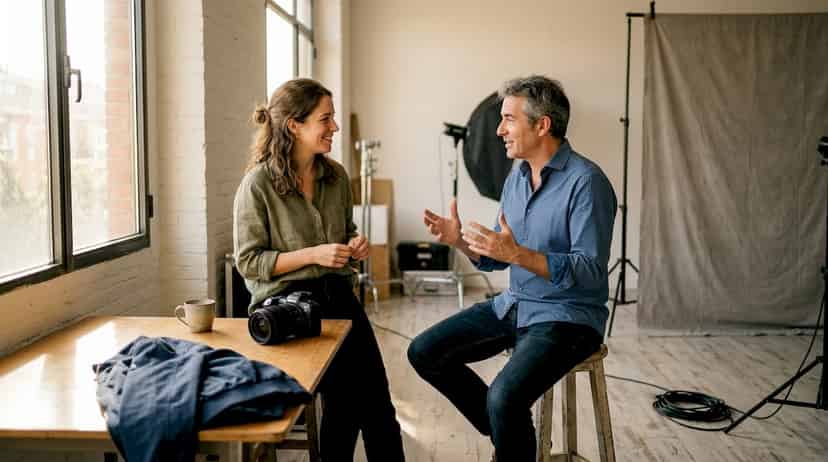
Discover Author Photography: Authenticity in Portraits
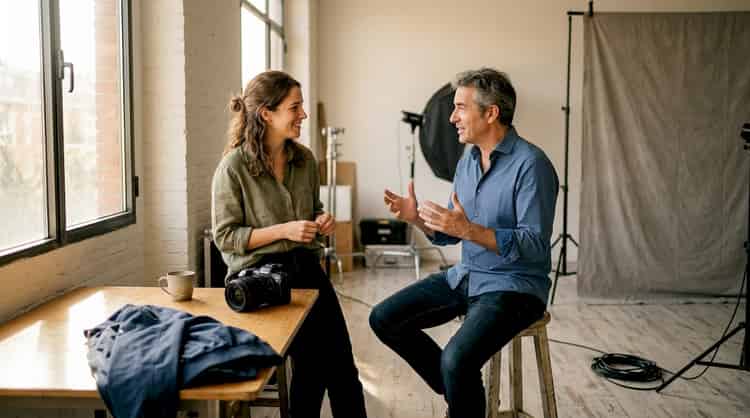
Not all portraits convey authenticity. Although we live surrounded by images, most adhere to repeated formulas: forced poses, catalog smiles, and neutral backgrounds that say nothing about the person depicted. Author photography breaks away from that logic. Instead of capturing an appearance, it seeks to reveal something deeper: the personality, emotions, and unique story of each individual. If you have ever looked at a photograph and felt that the person is truly there, present and alive, it is very likely that you were looking at an author portrait.
Table of Contents
- What is author photography and why is it different
- Methodologies and techniques for authentic portraits
- Comparison: author photography vs. commercial and editorial photography
- Opportunities in Palma de Mallorca: author photography and emotional portraiture
- Our vision: the real value of an authentic portrait
- Custom portraits in Palma: your next step
- Frequently asked questions
Key Points
| Point | Details |
|---|---|
| Authenticity above all | Author photography reveals the true personality and emotions of the subject. |
| Emotional connection | Achieving authentic portraits requires empathy and prior communication. |
| Clear differences between styles | Author, commercial, and editorial photography have very different purposes and results. |
| Local opportunity | In Palma de Mallorca, the demand for authentic portraits is growing. |
What is author photography and why is it different
Author photography is a discipline where the photographer acts as an artist with their own voice. It is not simply about capturing a moment but interpreting it from a personal and creative perspective. The result is an image that bears the visual signature of the author as much as the essence of the subject being photographed.
There is frequent confusion between three modalities that, while related, have very different purposes:
- Commercial photography: aimed at selling products or services. The aesthetic is polished, predictable, and serves a brand.
- Editorial photography: accompanies journalistic or magazine texts. It has an informative purpose and follows the guidelines of a publication.
- Author photography: emphasizes personal vision and art, showing raw authenticity without subordinating to any commercial or informational purpose.
What truly distinguishes author photography is its unique style. Every decision, from framing to lighting, reflects a conscious artistic intention. No two author photographers produce the same result in front of the same subject because each filters reality through their unique sensitivity.
"An author portrait does not show how you are, but who you are. That difference changes everything."
In practice, this translates into images where genuine emotions take center stage. A questioning gaze, a half-formed smile, a spontaneous gesture: those are the moments that author photography pursues. You can explore the different types of artistic portraits to understand how each approach reveals a different dimension of the person. And if you want to delve deeper into what makes an image truly powerful, the key elements in portraits will provide you with very useful insights.
Methodologies and techniques for authentic portraits
Achieving authenticity in a portrait is not a matter of luck. It requires a deliberate process that begins long before the shutter is pressed. The fundamental techniques for authenticity include connection, dialogue, empathy, natural poses, creative lighting, and subtle editing.
This process can be structured into several phases:
- Preparation and dialogue: before the session, a deep conversation with the subject allows understanding their story, fears, and what they want to express. This phase is the most important and the most overlooked in conventional photography.
- Subtle direction: instead of imposing poses, the author photographer guides with gentle suggestions. "Think of something that makes you laugh" produces an infinitely more real result than "smile."
- Creative lighting: soft, side lighting naturally shapes the face. Avoiding direct front flash eliminates that flat appearance that flattens emotions.
- Strategic composition: the rule of thirds, neutral or meaningful backgrounds, and negative space direct attention towards what is essential: the person.
- Subtle editing: retouching without erasing. Skin has texture, eyes have stories. Excessive editing destroys precisely what author photography seeks to preserve.
| Aspect | Conventional Photography | Author Photography |
|---|---|---|
| Preparation | Minimal | In-depth prior conversation |
| Direction | Static poses | Subtle emotional guidance |
| Lighting | Standard front flash | Creative and natural light |
| Editing | Minimal, preserving authenticity |
Professional tip: spend at least 20 minutes before the session talking to the person without a camera in hand. This time creates a trust that shows in every image. Authentic studio portraits demonstrate how this process transforms the final result. You can also read about the role of the photographer in creating that connection, or discover how to make artistic portraits that truly capture the essence.
Comparison: Author Photography vs. Commercial and Editorial Photography
To make an informed decision about what type of photography you need, it is helpful to see the differences clearly. Commercial and editorial photography tends to be polished and planned for informational or sales purposes, while author photography highlights personal vision and authenticity.
| Criterion | Author Photography | Commercial Photography | Editorial Photography |
|---|---|---|---|
| Purpose | Artistic and emotional expression | Sale of products or services | Illustrate journalistic content |
| Aesthetics | Personal, imperfect, authentic | Polished, uniform, predictable | Informative, contextual |
| Authenticity | Maximum | Low, subordinate to the brand | Medium, depending on the medium |
| Creative Freedom | Total | Limited by the client | Limited by the publication |
| Emotional Impact | Deep and lasting | Functional and temporary | Informative |
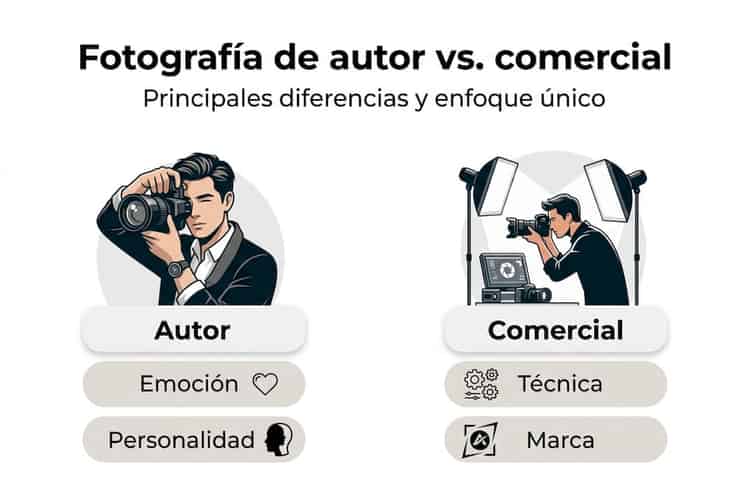
What is particularly interesting is how they impact the viewer. A commercial image can be technically perfect and generate no real emotion. An author portrait, on the other hand, may have a slight imperfection that makes it absolutely magnetic.
More Posts
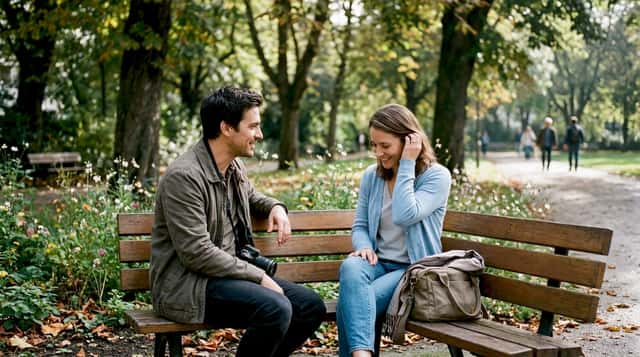
Storytelling in Photography: Authentic and Memorable Portraits
Discover how storytelling transforms your portraits into authentic and memorable images. Learn the key elements of visual narrative for artistic photography.

How to Prepare Authentic Business Team Photos
Learn how to prepare authentic business team photos in Palma de Mallorca: planning, logistics, art direction, and mistakes to avoid.